




|
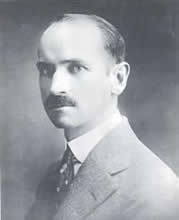
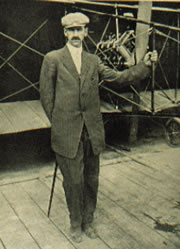
Glenn Hammond Curtiss Native of Hammondsport; "Fastest man in the world" in motorcycle race in 1907; designer, builder & pilot of early aircraft "Junebug", flew 5,090 feet in 1908 for first pre-announced flight; holder of pilot's license #1; builder of "Jenny ", World War I trainer & barnstorming plane & NC-4, first transatlantic plane; industrialist; land developer - Hialeah, Opa-locka & Miami Springs, Florida. |
|
Curtiss designed the famous June Bug and became its test pilot, undertaking most of the proving flights. He was the recipient of U.S. Pilot's license #1 from the Aero Club of America. The flight of the June Bug propelled Glenn Curtiss and aviation firmly into public awareness. As a result of Curtiss' early success, The Curtiss Aeroplane and Motor Company became the largest aircraft manufacturer in the world during World War I and went public in 1916 with Curtiss as president. Curtiss had become the world's largest aviation company with 21,000 employees(18,000 at its Buffalo facility and 3,000 at its Hammondsport, NY location.) They produced 10,000 planes during World War I, more than 100 in a single week. |
|
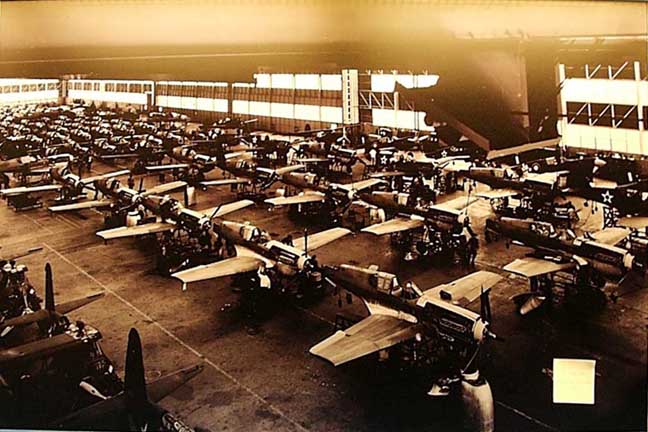
The Curtiss P-40E in production in Plant 2 on Genesee St. in Buffalo, NY.18,000 worked in the Buffalo plant. |
|
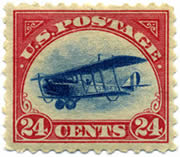
Although numbered as Scott C3, the 24-cent Curtiss Jenny issue is the first US airmail stamp. The Act of May 6, 1918 authorized the Post Office Department to carry the mail by airplane and set a rate of 24 cents per ounce. On May 11, 1918, the same day that President Woodrow Wilson signed the Act, the Post Office announced the new service. |
|
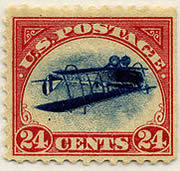
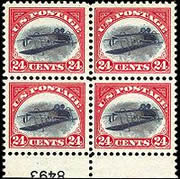
The inverted Jenny was first issued May 10, 1918. It was accidently printed upside down by the Post Office. Only one page of the inverted Jenny was ever found. In 2007 a single stamp was sold for $977,000. |
|
In 2005, a block of four stamps, still connected, was sold to an anonymous buyer for nearly $3,000,000. |
|
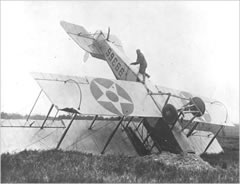
Wreck of Curtiss JN-4H "Jenny" airmail plane. |
|
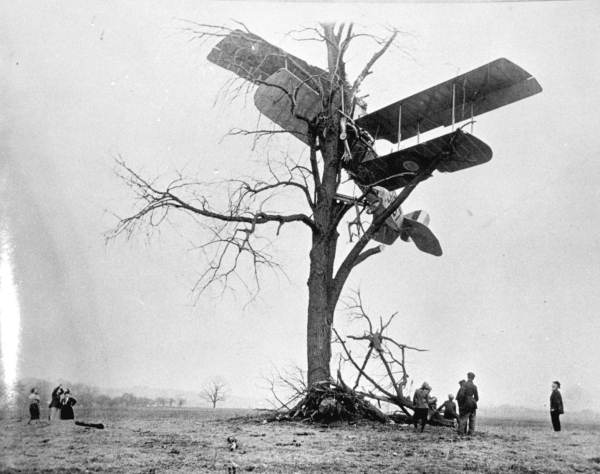
Another Curtiss JN-4H "Jenny". |
|
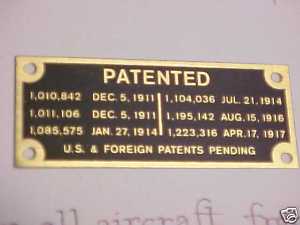
Brass patent plate for a WWI Curtiss Jenny aircraft. These patent plates were used on all Curtiss-built airplanes from 1911 through 1922. |
|
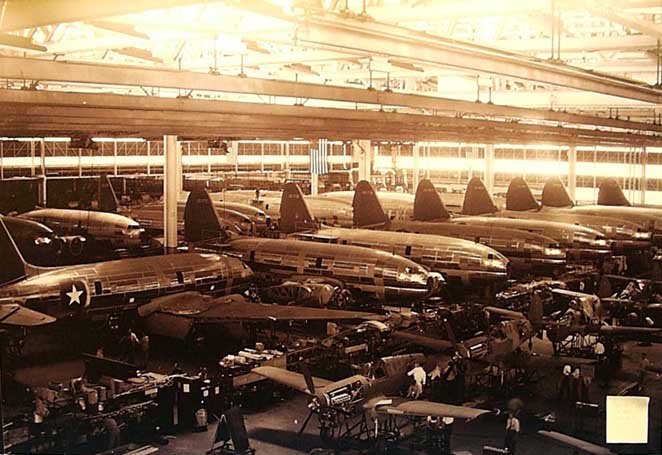
The Curtiss C-46s and P-40s in production in 1942 in Plant 2 on Genesee St. in Buffalo, NY |
|
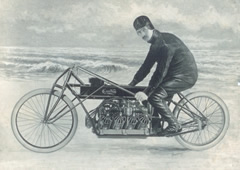
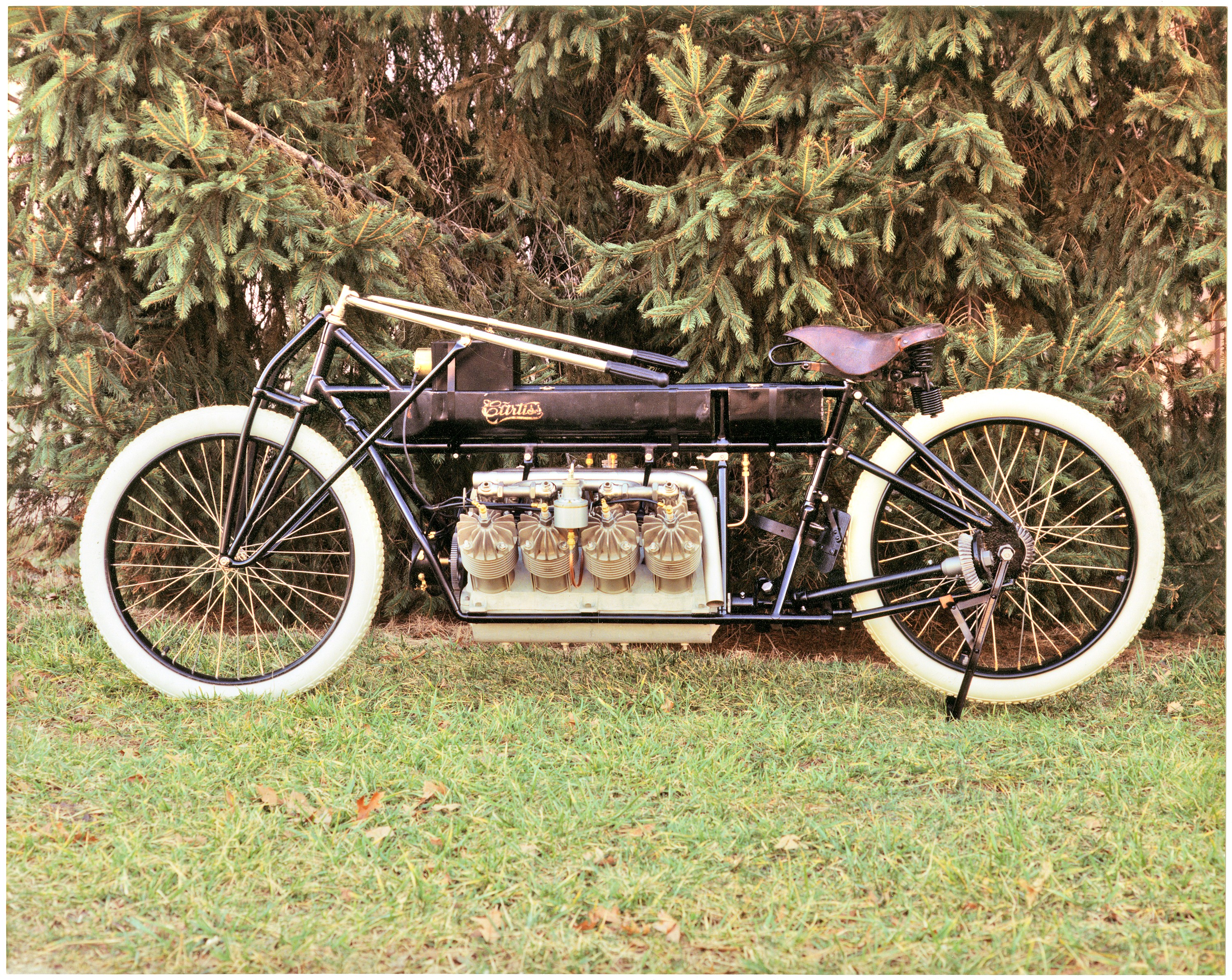
Glenn Curtiss became the "Fastest Man on Earth" in 1907 when he ran a prototype V-8 motorcycle built by himself. The record of 136.3 mph was set at Ormond Beach, Florida. |
|
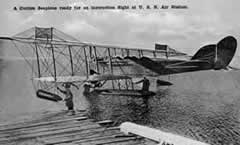
Among Curtiss' titles is "Father of Naval Aviation." He was the inventor of the seaplane. |
|
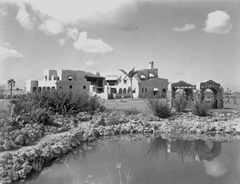
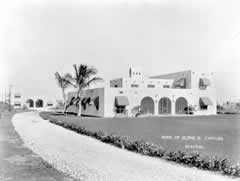
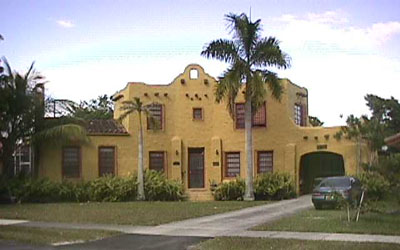
Glenn Curtiss' Home in Miami Springs The Glenn Curtiss House was constructed in 1925 for this aviation pioneer who had established his own airplane company before becoming the developer of Miami Springs, Florida. Located in his Miami Springs development, Curtiss lived in this large, two-story residence designed in the Pueblo Revival style until his death in 1930. |
|
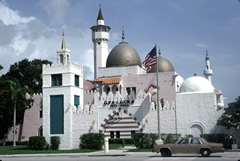
Glenn Curtiss' Home in Hialeah After WWI, Curtiss branched out into other areas and became less directly involved in aviation. He became a Florida land developer. With friends he developed the communities of Hialeah, Miami Springs, and Opa-Locka. He also was an early pioneer in the RV industry building the Curtiss Aerocar. |
|
Opa-Locka - Planned Community with Moorish Architecture In 1921 Curtiss moved to Florida to become a highly-successful land developer. With friends, he developed the Florida cities of Hialeah, Miami Springs, and Opa-Locka. Opa-Locka was intended to be his crowning achievement, a planned community resembling something from the Arabian Nights. In the spring of 1930, he was awarded an honorary Doctor of Science degree from the University of Miami for his many contributions to the development of the Miami area. |
|
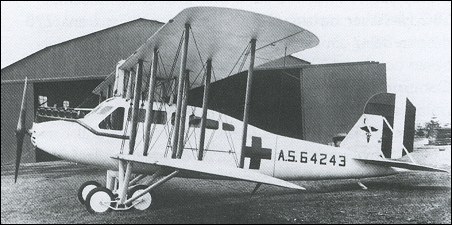
Curtiss Eagle Ambulance By the end of World war I, the US Army realized the need to transport the wounded by air. In 1918 Maj Nelson E. Driver and Capt William C. Ocker converted a Curtiss JN-4 Jenny biplane into an airplane ambulance by modifying the rear cockpit to accommodate a standard Army stretcher carrying an injured person in a semireclined seat. |
| The modification allowed the US Army to transport patients by airplane for the first time. This success led to an order directing all military airfields to have an air ambulance. | |
|
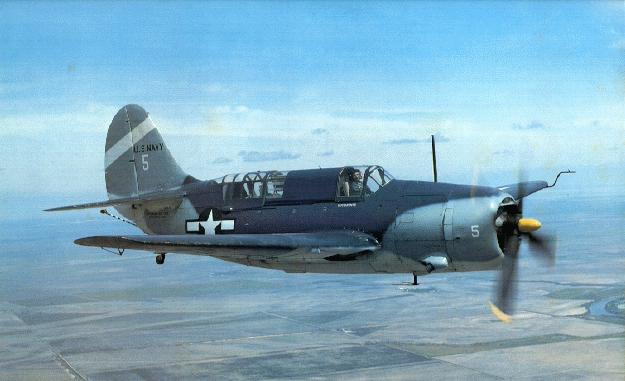
Curtiss SB-2C Helldiver The Curtiss Aircraft Manufacturing Company produced 29,269 aircraft during World War II. They also produced 146,840 aircraft engines and 146,468 electric propellers. Among the aircraft produced were 7140 Helldivers delivered to the U.S. Navy and they inflicted a lot of damage on the enemy. It was responsible for more shipping kills than any other aircraft. |
|
Although production problems persisted throughout its initial combat service, pilots soon changed their minds about the potency of the Helldiver. Curtiss opened a new facility in Columbus, Ohio just to build the Helldiver dive bomber for the war. By June 20,1944 five squadrons were operating from the aircraft carriers Yorktown, Hornet, Bunker Hill, Wasp and Essex. Four of these five carriers launched 52 Curtiss Helldiver dive bombers toward the 300 mile distant Japanese fleet. Forty-three of the Helldivers didn't return. While only four were lost in combat, 35 ditched for lack of fuel and four more crashed into U.S. Navy ships. Most of the crewmen survived; 104 men took off in Curtiss Helldivers that day; only 18 didn't make it. |
|
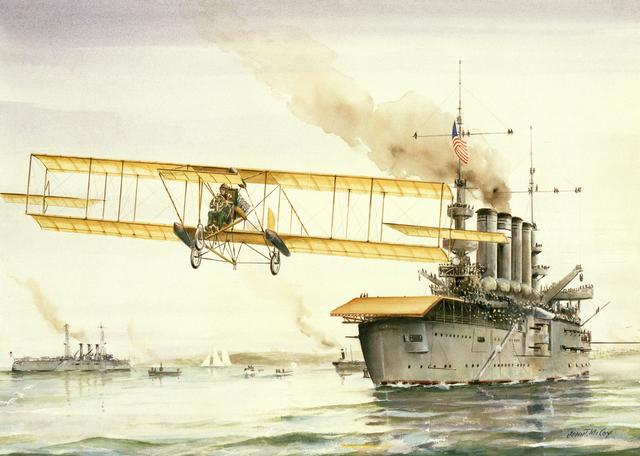
|
USS Pennsylvania (ACR-4)
|
|
The workers at the shipyard had never seen anything like it before. In less than fourteen days, Mare Island had built a steel frame, erected a wooden platform upon it, affixed ropes which were stretched across the platform and anchored to sand bags on both ends, all before the ship shoved off for the San Francisco Bay. Eugene B. Ely would visit the yard to check on the work, which involved building a wooden platform 133 feet 7 inches long (from the mainmast to just over the fantail) and 31 feet 6 inches wide over the main deck. It was there, on the 18th of January, 1911, Eugene B. Ely cranked up his Curtiss biplane, wrapped a few inflated inner tubes around himself in case he missed, and kited across the bay toward the Pennsylvania and thus became the first man in the world to land an airplane on a ship - the world's first aircraft carrier |
|
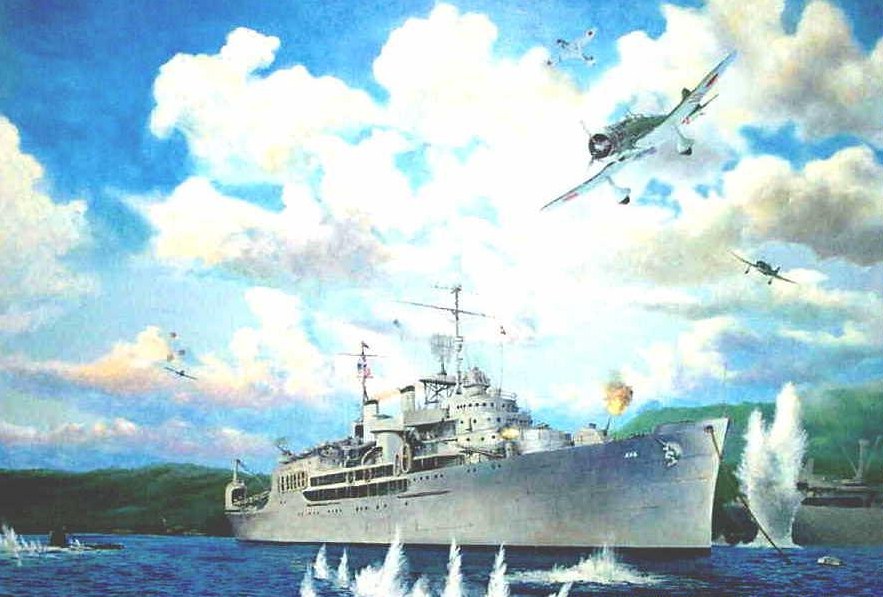
U.S.S. Curtiss (AV-4) USS Curtiss, lead ship of a class of two 8671-ton seaplane tenders, was launched 20 April 1940 by New York Shipbuilding Corp., built at Camden, New Jersey, sponsored by Mrs. H.S. Wheeler, and commisssioned in November 1940. She served in the Atlantic until May 1941, when she was sent to the Pacific. During the next several months, she supported seaplane operations out of Pearl Harbor, Hawaii, and made one voyage to reinforce the garrison at Wake Island. The Curtiss was at Pearl Harbor on 7 December 1941. |
|
|
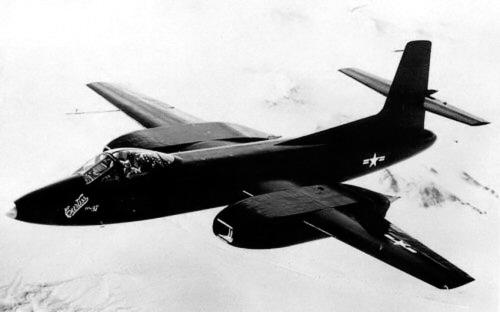
Curtiss XF-87
The XF-87 was the last aircraft built by Curtiss Aircraft. Maximum speed: 520 mph. |
|
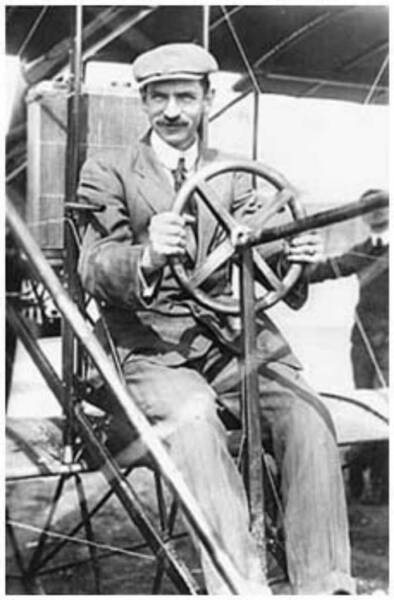
Glenn Hammond Curtiss
Glenn Hammond Curtiss was born in Hammondsport, at the southern tip of Keuka Lake, New York on
May 21, 1878. At the age of four he was left without a father and lived with his grandmother. He
earned the money for his first bike by working for Eastman Kodak and then became a Western Union
delivery boy. |
| In 1930 Glenn Hammond Curtiss was presented the Congressional Medal of Honor. In an anniversary flight he retraced his Albany to New York route of twenty years before. He passed away in July, 1930, leaving behind a legacy for the benefit fo the entire aviation community. | |
| Click HERE for more information | |
|
||||||||||||||||||||||||||||||||||||||||||||||
|
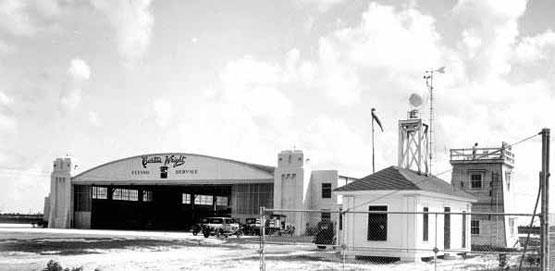
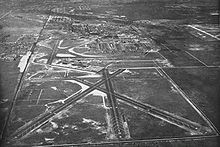
1930 - Curtiss-Wright Corporation aircraft hangar at Miami Municipal Airport in northwest Dade County, Florida Glenn H. Curtiss, a multi-millionaire, known as the "Father of Naval Aviation" and retired from the airplane business, moved to south Florida and became a land developer. He established the towns of Opa-Locka, Hialeah and Miami Springs. In 1930, shortly before his death, he formed the Florida Aviation Camp, moving his aviation school there from its Biscayne Bay location. He then donated part of the land for the Miami Municipal Airport, first known as Glenn Curtiss Field, later becoming a part of what is now known as Miami International Airport. |
||||||||||||||||||||||||||||||||||||||||||||||
|
||||||||||||||||||||||||||||||||||||||||||||||
|
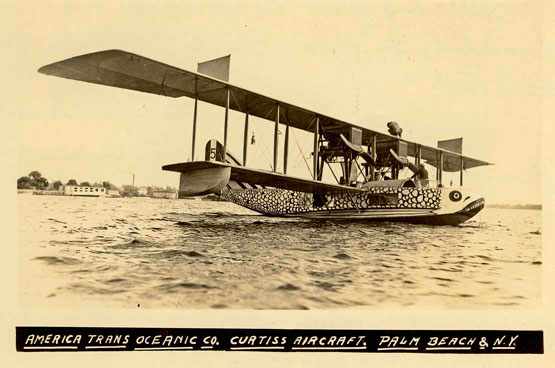
The Big Fish seaplane The Big Fish 12-passenger seaplane was a familiar sight on Lake Worth. The Big Fish was a Curtiss H-16 flying boat, destroyed in a 1921 crash. Courtesy of Historical Society of Palm Beach County. |
||||||||||||||||||||||||||||||||||||||||||||||
|
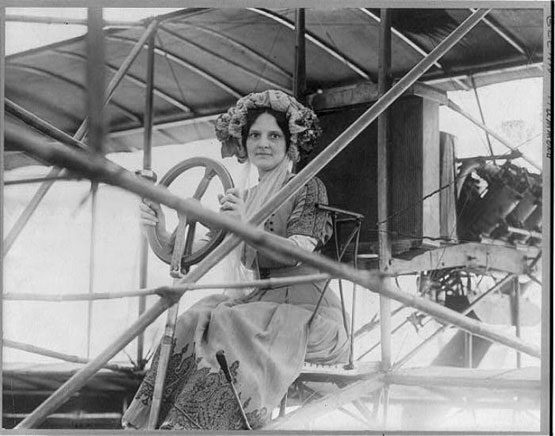
Mrs. Curtiss makes flying look like a breeze.
|
||||||||||||||||||||||||||||||||||||||||||||||
|
||||||||||||||||||||||||||||||||||||||||||||||
|
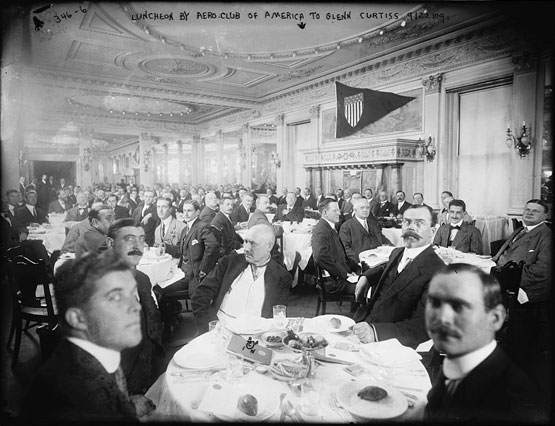
The Aero Club of New York When the Aero Club of New York honored Glenn Curtiss at its 1908 luncheon, Curtiss shared the head table with Wilbur Wright, who were cordial to each other, even though they were engaged in patent court battles for nearly two decades. The eventual settlement in 1917 resulted in Curtiss and the Wright Brothers each receiving a $2 million dollar payment from the U.S. government to get them to stop their patent war and turn their attention to building planes to fight in World War I. It also resulted in the creation of the Curtiss-Wright Aviation Company. |
||||||||||||||||||||||||||||||||||||||||||||||
|
||||||||||||||||||||||||||||||||||||||||||||||
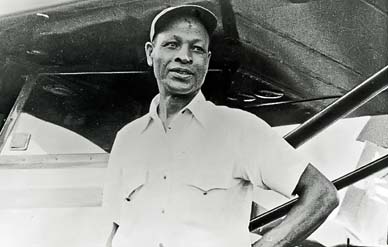
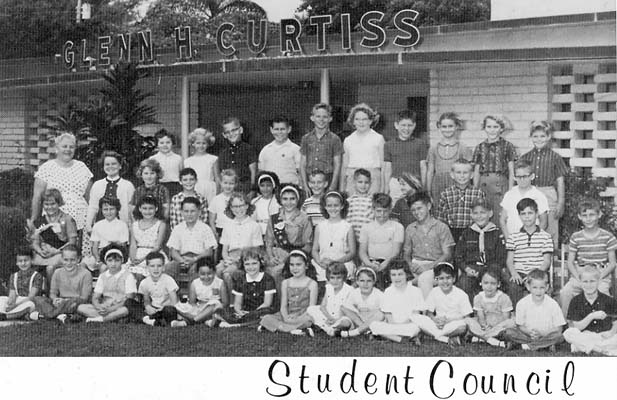
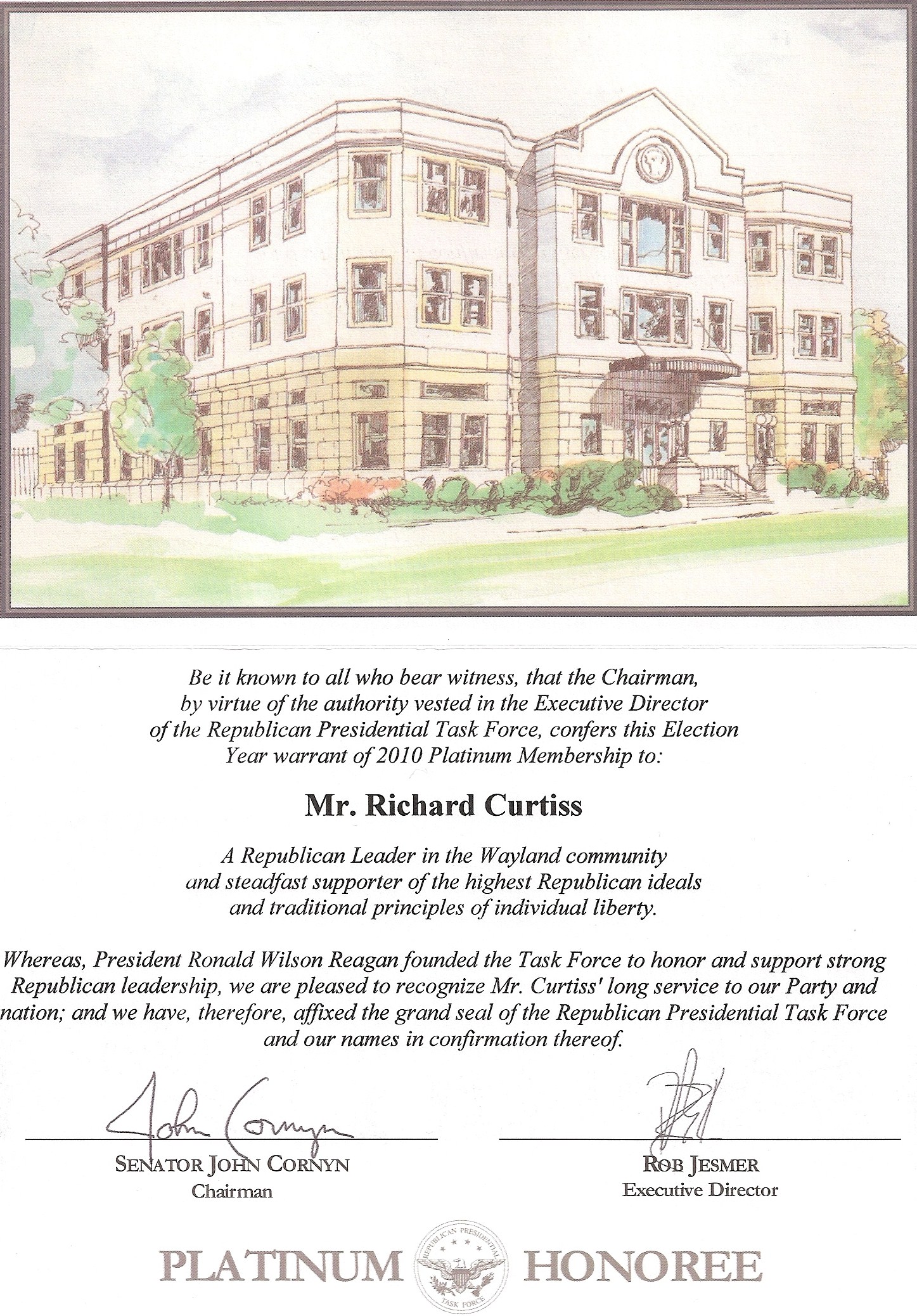

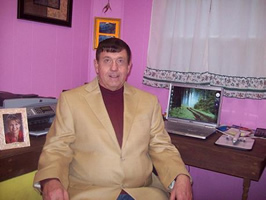
Richard C. Curtiss
|
Richard C. Curtiss started CurtissWay as a family legacy for generations to come. The Curtiss
family built many military ships and aircrafts throughout American history.
Be sure to check back frequently. Last update: November 22, 2021. There will be lots of exciting news and information updated frequently. |

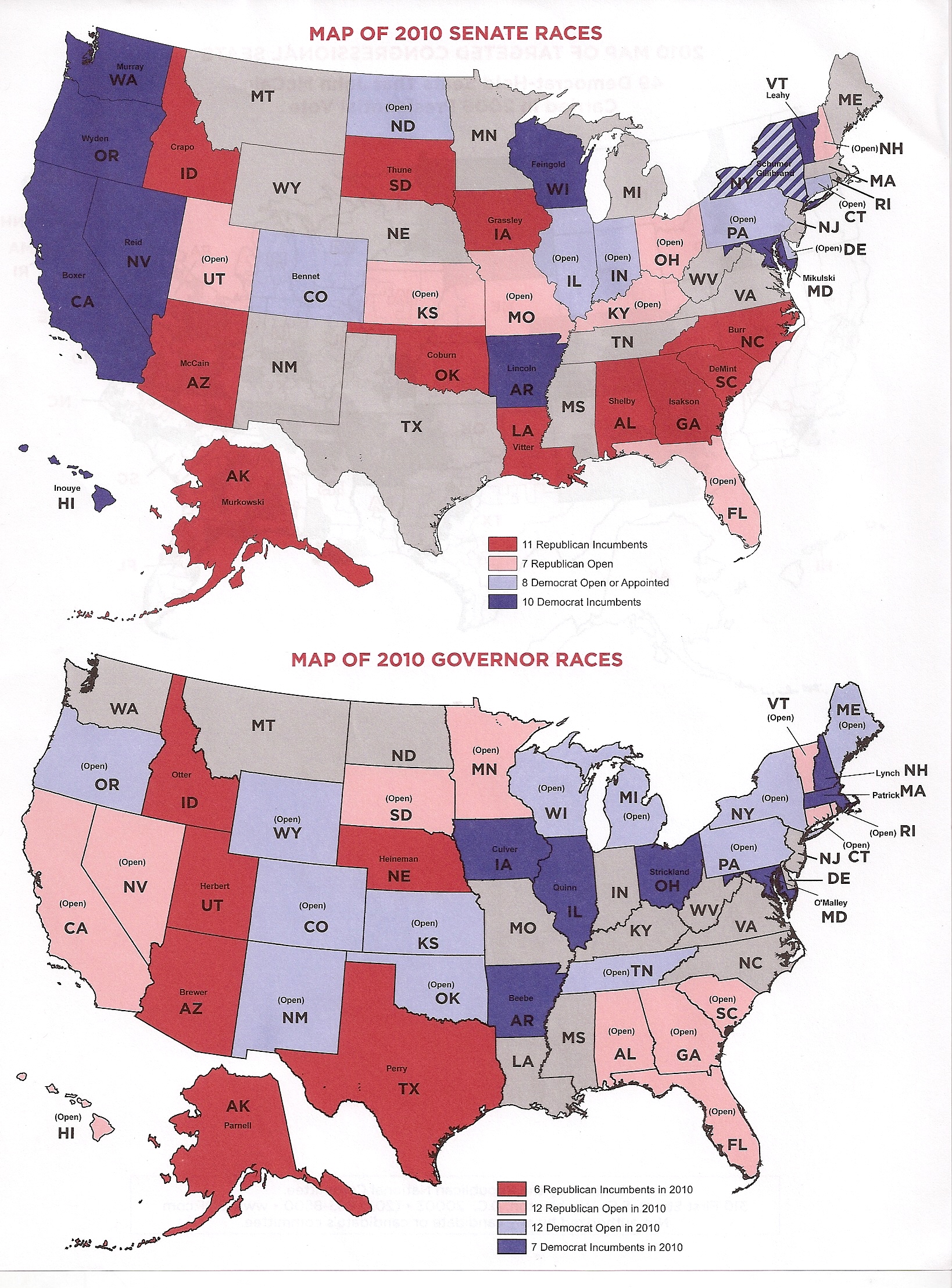
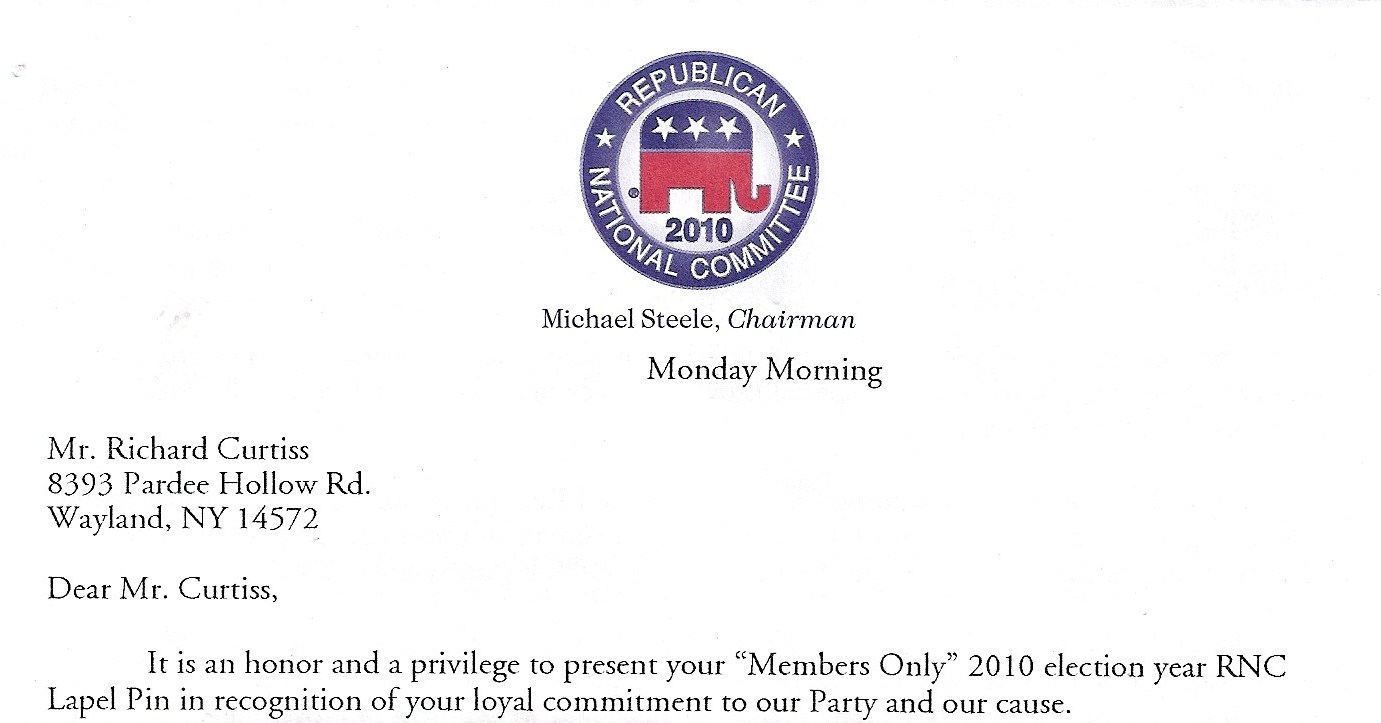
June 4, 2010
Mr. Richard Curtiss
8393 Pardee Hollow Rd.
Wayland, NY 14572-930
Dear Mr. Curtiss,
I'm embarrassed to have to admit this, but I hope
you will accept both my apology and your corrected 2010 RNC "Charter Member" Gold Card that
I've enclosed.
As Membership Director of the RNC, I notified Chairman Steele
earlier this year that you had met the stringent selection criteria for Charter Membership.
This
is one of the highest levels of distinction in our Party, and I want you to know how much your support
means to all of us. In fact,
fewer than three percent of our Party's members across the country qualify for this honor!
That's why Chairman Steele was so pleased, just a few weeks ago, to present you
with your 2010 Charter Member Gold Card in appreciation for your steadfast support for our Party and
candidates.
So you can imagine how bad I felt when I had to tell the Chairman I'd
slipped up!
Due to a printing error, which I should have caught and corrected, the 2010
Gold Card the Chairman mailed you failed to recognize your "Charter Member" status.
I've
apologized to the Chairman for my gaffe and I hope you will forgive me as well. I understand your
commitment to our Party and our cause is too important for us not to give you the proper recognition you
deserve. Fortunately, Chairman is giving me the chance to set things straight.
So I hope
you will accept my apologies for my oversight, and carry your new 2010 Charter Member Gold Card with
pride.

|
||||||||||||||||
| "Mr. Curtiss its an honor at this White House in Washington to talk to Richard Curtiss and its certainly is an honor to talk to an American Farmer." |
|
|
| "Mr. Curtiss would you be willing to come to work for the Department of Justice? " (1998) (O.I.G.) I need to go back to one of our Federal Judges in New York City. |
|
|
| "Dick the man I am going to call on your behalf today in our country is by far the most POWEREFUL MAN inside the United States Government." |
|
|
| "Mr. Curtiss would you let Congressman Jack Kemp's office see what we can do for you?" |
|
|
| "Mr. Curtiss what do you want the FBI to do?" |
|
|
| "New York State Police "Dick did you know that there are a lot of people in this area that are out to get you?" "You need to be careful." 6-07-09" |
|
|
| "Dick would you like to have me show you how us guys that run this United States Government today do things? Us Politicians, Us Elected Officials, The Bosses" |
|
|
| "Mr. Curtiss we are all Civil Service Employees and there is nothing anybody can do with any of us" US = Government Employees |
|
|
| "Mr. Curtiss you Farmers have to learn to pay your Taxes just like the rest of us do" US = Government Employees |
|
|
| "Mr. Curtiss we do anything we want. Nobody can stop us." US = Government Employees |
|
|
|
"Before this meeting starts today I think the first thing I should explain to all of you in the room is that Mr. Curtiss knows people in some of the highest places of our Federal Government and I want all of you to know this before we start and you make any decisions" US = Government Employees
"How many of your museums in the United States have you been too." "Mr. Curtiss, if we didn't get Bill Clinton with Monica Lewinsky we will get Clinton with you." |
|
|
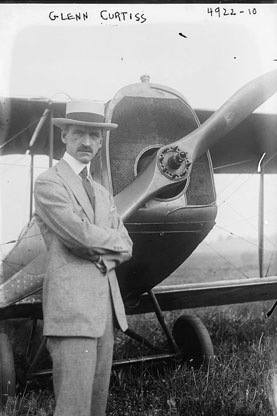
Glenn Hammond Curtiss
There's no question that Glenn Curtiss was one of the most significant figures in the early
development of motorcycles, aviation and engine development. And what a life it was. Descriptions of
this man prove to be contradictory and controversial. He was quiet, yet dashing. Kind, yet stern.
Uneducated, yet a technological and entrepreneurial pioneer. He began his inventing career by
building and racing motorcycles, while creating new internal combustion engines, then moved on to
work with dirigibles, airplanes (particularly seaplanes), community development and travel
trailers.
In the end, Glenn Curtiss - a man respected by contemporaries for his character. |
|
CLICK HERE to see The Life and Times of Glenn Hammond Curtiss, by David Langley |
|
| CLICK HERE to see a web site showing ALL Curtiss aircraft | |
|
|
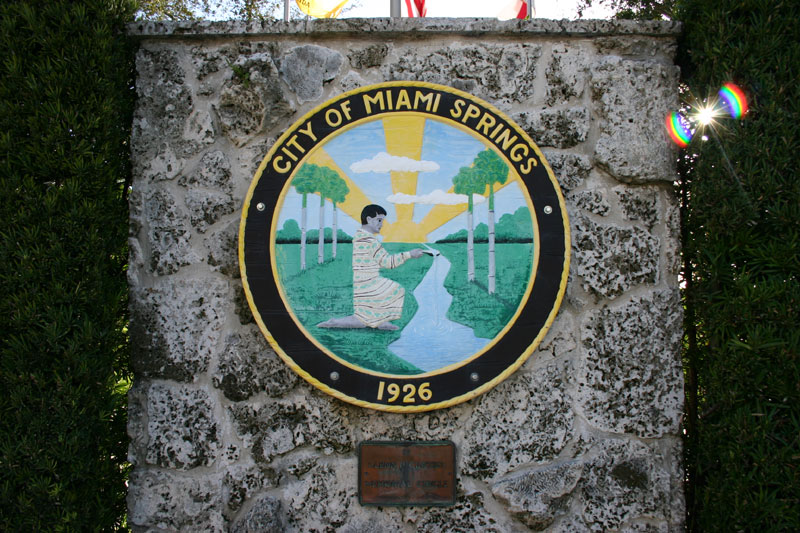
The official seal of the City of Miami Springs, Florida
When Curtiss left the aircraft industry after buying out the Wright Brothers and forming Curtiss-Wright Corporation, he retired at age 40 with $35 million dollars in the bank. He became a land developer in Florida after purchasing 220,000 acres in Dade County, Florida. There he created the towns of Miami Springs, Hialeah, Opa-locka and the airport called Curtiss Field. That airport is now Miami International Airport. |
|
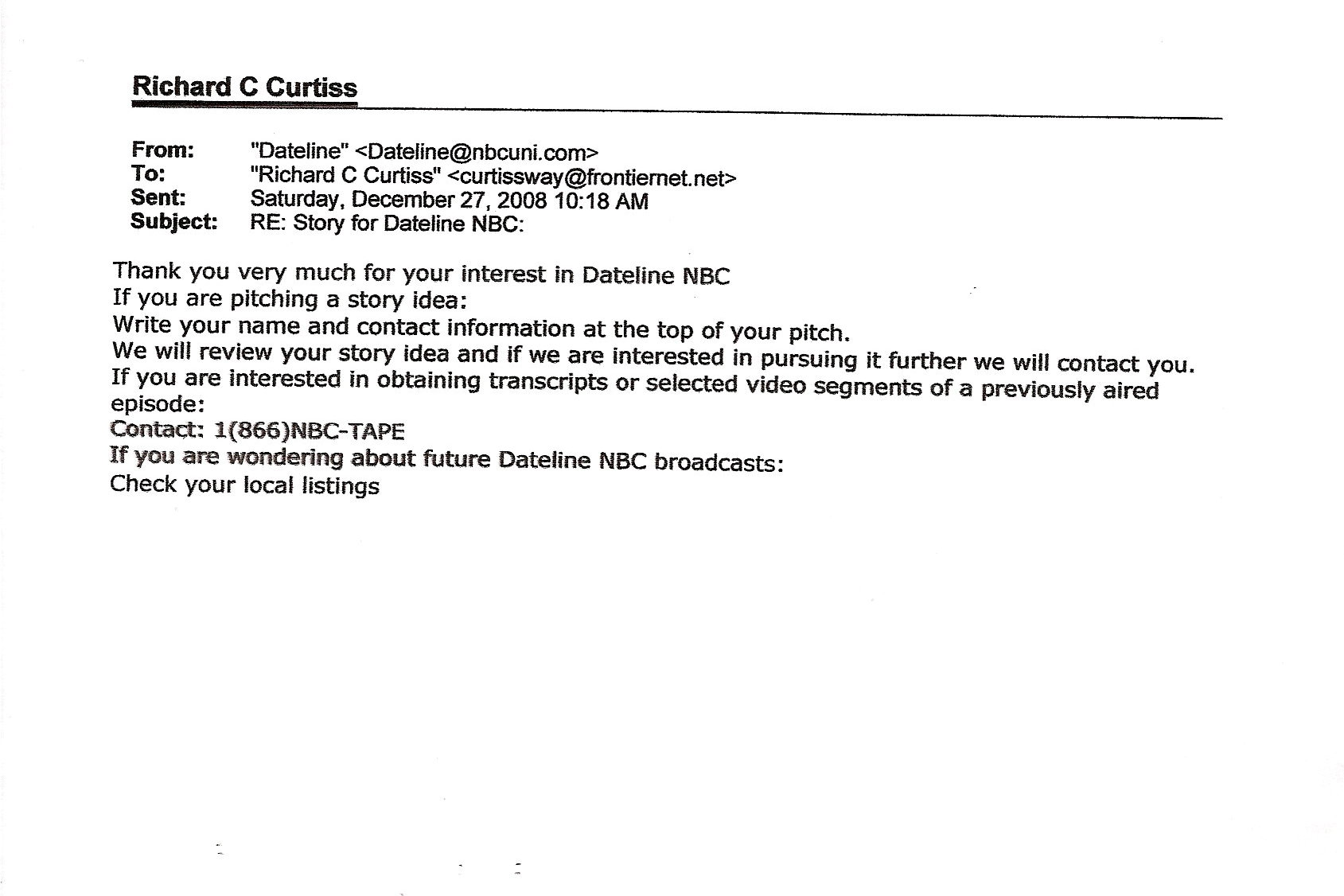
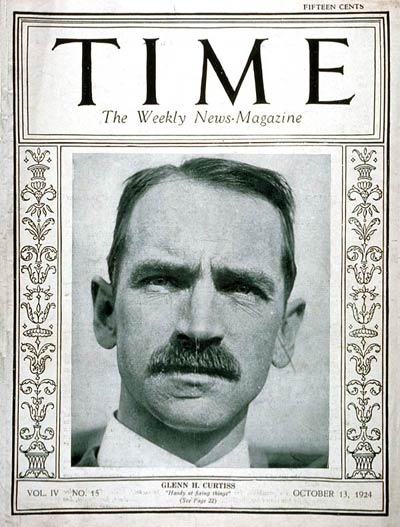
1924 Time magazine cover featuring Glenn Curtiss. Click HERE to see the document granting access to this image Click HERE to see the Dateline NBC document
|
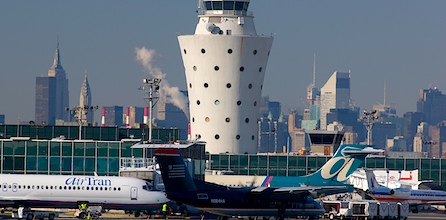
LaGuardia Airport |
|
LaGuardia Airport is an airport located in Queens County on Long Island in the City of New York. The
airport was originally named Glenn H. Curtiss Airport after aviation pioneer Glenn Hammond Curtiss,
then renamed North Beach Airport, then later named for Fiorello H. LaGuardia, a former mayor of New
York. In 1960, it was voted the "greatest airport in the world" by the worldwide aviation
community. Today, LaGuardia Airport is one of the busiest in the nation, handling more than 23 million passengers in 2008. |
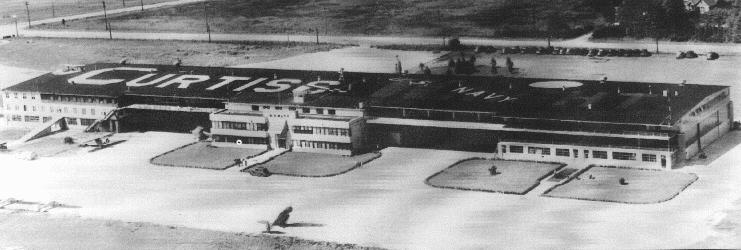
Curtiss Airport - Chicago |
| The Curtiss Flying Service planned the new facility to be Chicago's major metropolitan airport, one designed to attract private as well as commercial aircraft. The new airport would be the finest in the Curtiss chain of airfields, which would ultimately stretch from coast to coast. An added attraction was to be a "flying" country club, an idea that was gaining popularity. In the years that followed, the field became known as Curtiss-Wright, Curtiss-Rreynolds-Wright, Curtiss-Chicago, and more often, simply Curtiss. |
| CLICK HERE to learn more about this airport |
|
||
|
The Smithsonian Institution is home to nineteen museums and nine research centers. Click HERE to visit the Smithsonian National Air & Space Museum website Click HERE to read letter to Richard C. Curtiss from the Smithsonian Institution
|
|
|
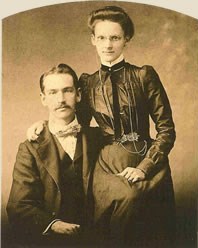
Mr. and Mrs. Glenn H. Curtiss Click HERE to see Curtiss' accomplishments
|
|
|
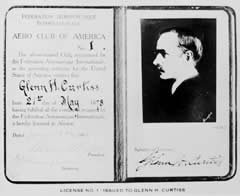
Pilot's License #1 issued to Glenn Hammond Curtiss. Wilbur and Orville Wright got pilot's license #4 and pilot's license #5. |
|
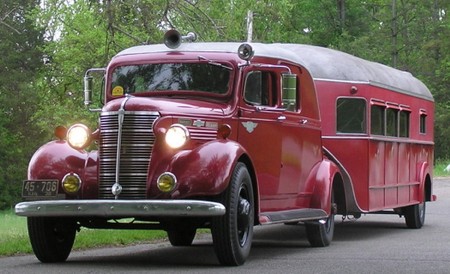
| 1938 Curtiss Aerocar | ||
|
Curtiss created a lavish "motor bungalow" as early as 1919. In 1928, he revamped his design and called it the Aerocar. It looked, on the outside, like a fancy horse trailer. It featured four berths, a galley, running water and an "observatory cockpit with a glass roof". It cost a whopping $2500 then and is now for sale for $250,000. | |
|
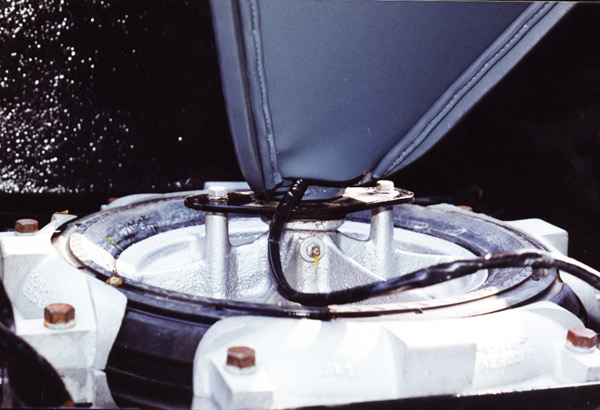
The "Glenn Curtiss Aero Coupler" consisted of a tire and wheel mounted horizontally to the trunk floor of a passenger coupe or to a specially designed tow vehicle. | |
|
The tire is inflated to absorb lateral, longitudinal and vertical road shocks. The trailer's goose neck kingpin slips into the wheel's bearing journal where an axle would normally fit. Thus was invented the fifth wheel trailer hitch. |
||
|
World War II Curtiss-Wright plant
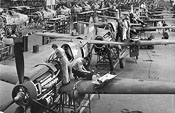
WWII - Curtiss-Wright leads the world in the production of aircraft engines, producing 142,840 engines for 13,789 Curtiss P-40 warhawk airplanes, with a complement of 146,468 propellers, while employing more than 43,000 employees. |
|
|
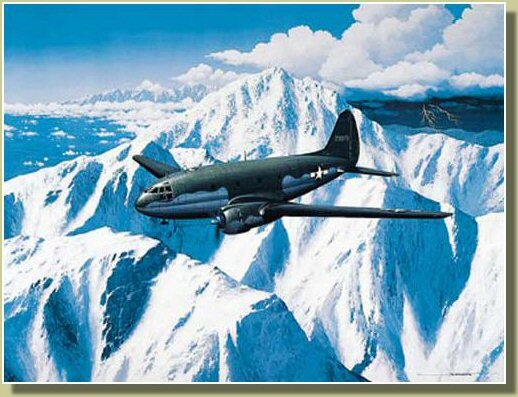
Curtiss-Wright constructed more than 29,000 airplanes during WWII, including the Curtiss C-46
Commando transport (below) and the Navy dive bomber, the SB-2C Helldiver (below left). By the end of WWII, Curtiss-Wright becomes the second largest U.S. company (General Motors remains first), with production facilities in Buffalo NY, St. Louis MO, Indianapolis IN, Louisville KY, Columbus and Cincinnati OH, Patterson, Woodridge, Clifton and Caldwell, NJ. |
||
|
Curtiss-Wright C-46 Commando Military Transport
3181 built between 1940 and 1945 |
|
|
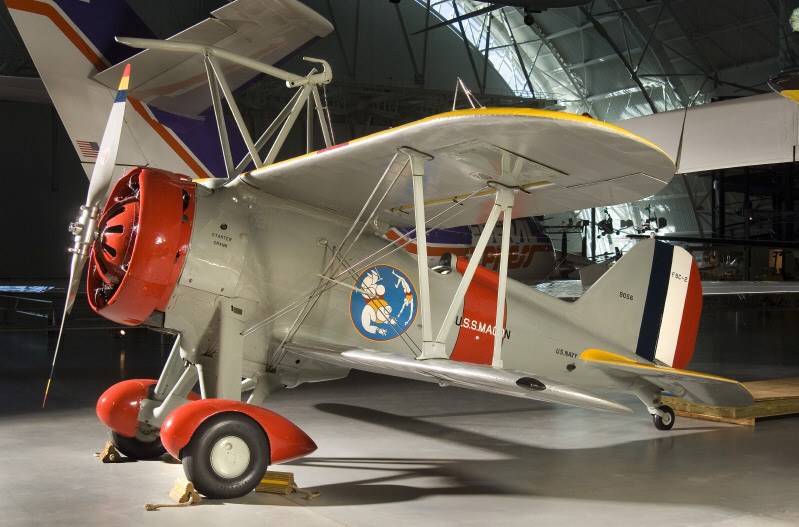
Curtiss F9C-2 Sparrowhawk
Operating from U.S. Navy airships during the early 1930s, diminutive Curtiss F9C-2 Sparrowhawks tested one of the more imaginative ideas in aviation history. Deployed with the USS Akron and Macon, they turned these airships into flying aircraft carriers. |
|
| The airplanes, which could be released and recovered in flignt, were to be used for attack, for defense of the airships, and to greatly increase search range for the Navy's giant, helium-filled dirigibles. | ||
|
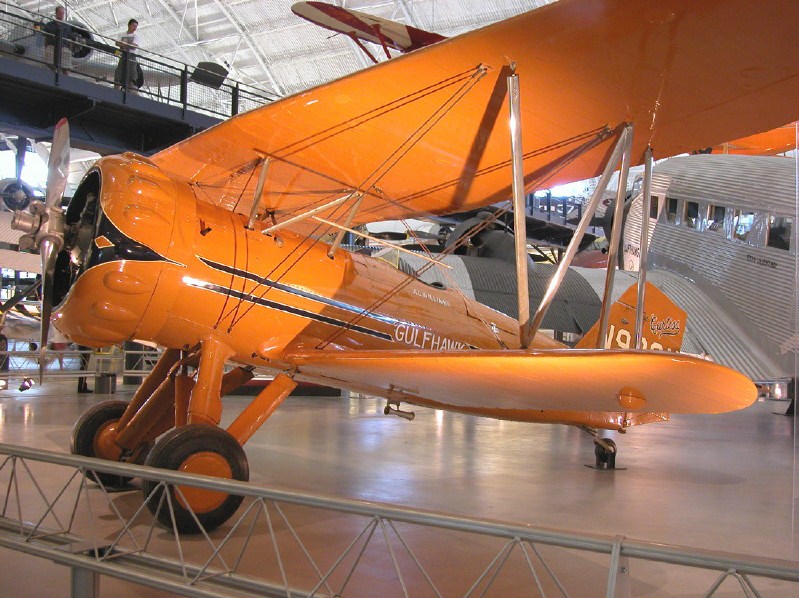
Curtiss A-1 Gulfhawk
The one-of-a-kind Curtiss Gulfhawk was flown from 1930 to 1936 by Al Williams, former chief test pilot for the U.S. Navy and famous aerobatic pilot. |
|
|
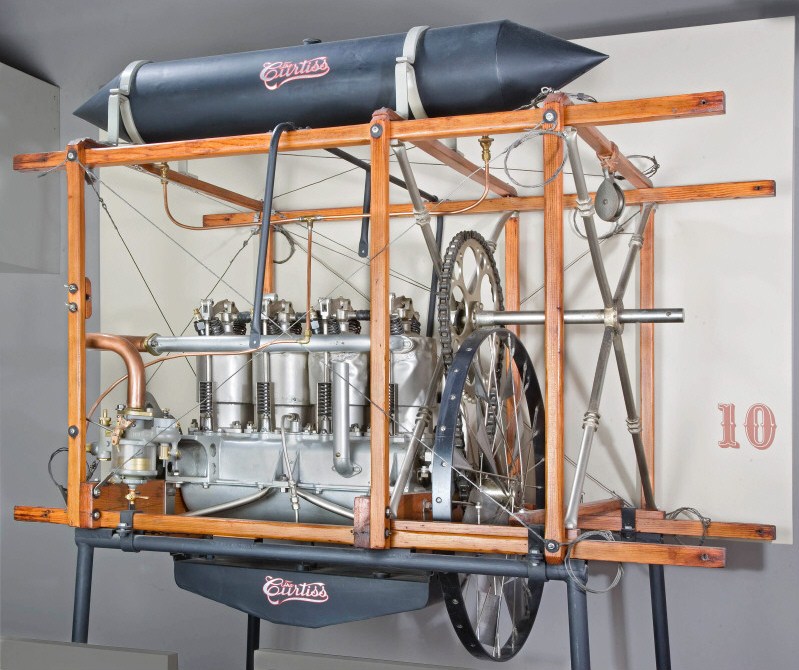
Curtiss E-4 dirigible motor
Manufacturer:
Curtiss Aeroplane and Designer: Glenn H. Curtiss in 1908 This is the first of two 14.9 kw (20hp) Curtiss Model E-4 engines that powered the U.S. Signal Corps Dirigible (blimp) No.1, the first U.S. military airship. The engine drove a tubular steel shaft about 6.7 m (22 feet) long on which was mounted a wooden propeller designed by Lt. Thomas E. Selfridge. Click HERE to visit the Smithsonian National Air & Space Museum website |
|
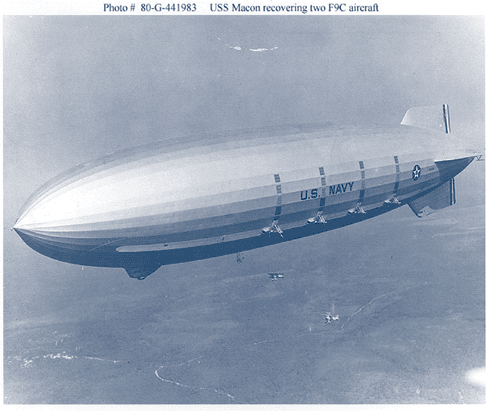
U.S.S. Macon with Curtiss F-9Cs attached
The concept of using a heavy-lift blimp to launch smaller UAVs has a historical basis. In 1933, the Navy used dirigibles as airborne aircraft carriers. |
|
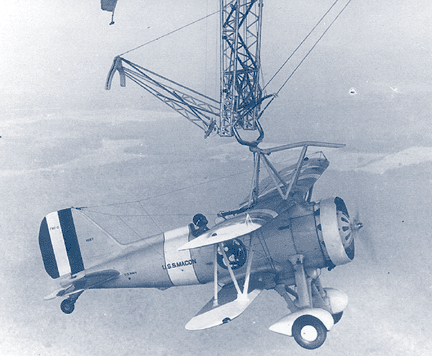
A Curtiss F9C-2 Sparrowhawk attaches to the trapeze of the U.S.S. Macon (above)
Blimps can be constructed to airlift up to 160 tons in cargo. They can be controlled from ground stations through takeoff, flight and landing. |
|
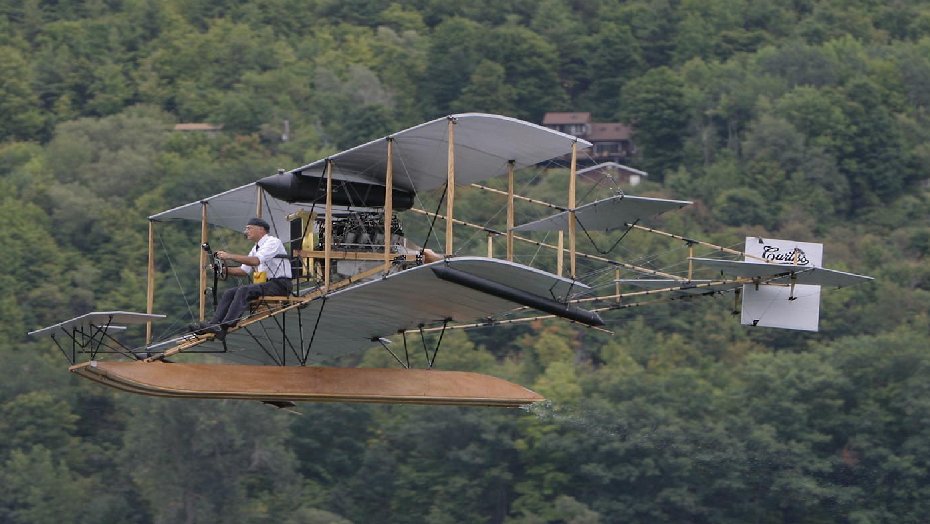
1911 Curtiss A-1 Triad
The first airplane The Curtiss A-1 Triad was the first Seaplane and Amphibian ever made. |
| The name "Triad" stands for three: land, air and water. Curtiss developed the Triad for the U.S. Navy. The A-1 Triad which Curtiss himself had test flown on Feb. 25, 1911, was the first seaplane to fly in this country, the first amphibious aircraft and the first U.S. Naval aircraft. It earned Glenn Curtiss the title of "The father of Naval Aviation". | |
|
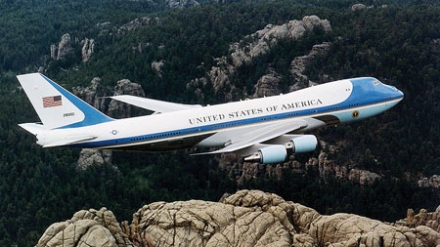
Air Force One
The newest airplane No matter where in the world the President of the United States travels, if he flies in an Air Force jet, the plane is called Air Force One. |
| Technically, Air Force One is the call sign of any Air Force aircraft carrying the President. In practice, however, Air Force One is used to refer to one of two highly customized Boeing 747-200B series aircraft, which carry the tail codes 28000 and 29000. The Air Force designation for the aircraft is VC-25A. Air Force One is one of the most recognizable symbols of the presidency. Capable of refueling in midair, Air Force One has unlimited range and can carry the President wherever he needs to travel. | |
|
|||
|
1912 Curtiss Model D
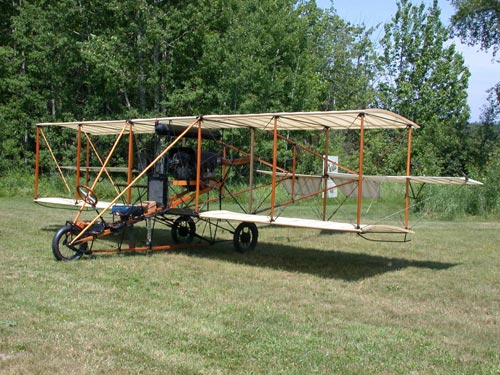
The Curtiss Model D pusher was a stock model which could be bought with one of several Curtiss engines; 40, 60 or 75 horsepower. The Model D was the basis for one of Curtiss' most famous achievements - the first amphibian airplane capable of landing on and taking off from land or water. The Model D was the first aircraft to utilize ailerons for banking and turning instead of wing warping. Our replica was built in 1961 in Sacramento, CA by Carl Mueller, who once worked for Curtiss at the U.S. Navy Flying School in San Diego. |
|||
|
|||
|
The Langley Aeroplane
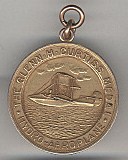
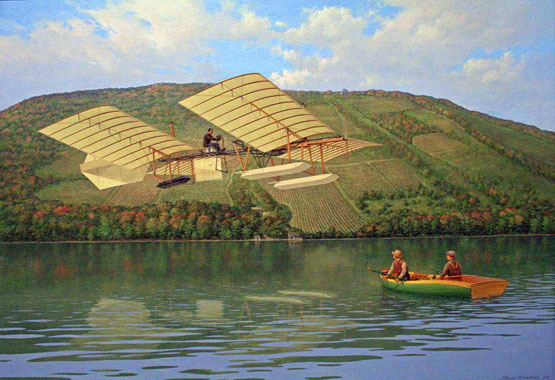
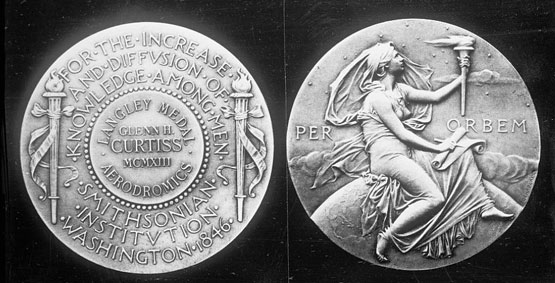
"Scaring the Fish", an oil painting by renowned Canadian aviation artist Robert Bradford, recreated the flight of the Smithsonian's Langley Aeroplane over Lake Keuka. After it failed to fly, the Smithsonian packed it in crates and shipped it to Curtiss, who reconstructed it and proved it to be airborne. Curtiss received the Langley Medal (below) from the Smithsonian, for getting the Langley to fly. |
|||
|
|||
|
In 1913 the Smithsonian awarded its prestigious Langley Medal to Glenn Curtiss for "The
increase and diffusion of knowledge among men."
|
|||
|
|||
|
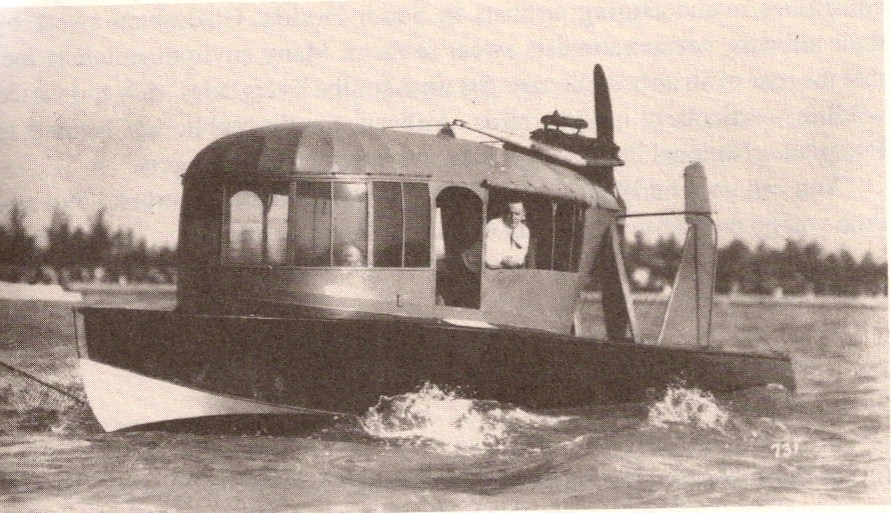
The 1920 Curtiss "Scooter" airboat
Glenn Curtiss is credited with building the first airboat in 1920. The millionaire, who later went on to develop the cities of Hialeah and Miami, combined his talents in the fields of aviation and design to facilitate his hobby of bow and arrow hunting in the Florida backwoods. The end result was 'Scooter', a 6-passenger, closed-cockpit, propellor-driven motorboat powered by an aircraft engine that could slip through the grassy wetlands at 50 mph. |
|||
|
Hialeah Park Race Track U.S.National Register of Historic Places 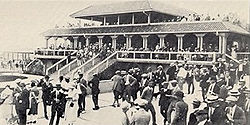
|
|||
|
Hialeah Park in 1925 The Hialeah Park Race Track (also known as the Miami Jockey Club or Hialeah Race Track or Hialeah Park) is a historic site in Hialeah, Florida. It is one of the oldest existing recreational facilities in southern Florida. Originally opened in 1921 by the famous aviation pioneer Glenn Curtiss and his partner James Bright, the Miami Jockey Club launched Hialeah's race track on January 25, 1925. The facility was severely damaged by a 1926 Hurricane. The park became so famous for its flocks of flamingos that it has been officially designated a sanctuary for the American Flamingo by the Audobon Society. The historic racetrack reopened on November 28, 2009. The full transormation is expected to cost $1 billion since the plan includes a complete redevelopment of the surrounding area, which includes empty lots and the towering pine trees, into a destination spot with a hotel, restaurants, casinos, stores and a theater. |
|||
|
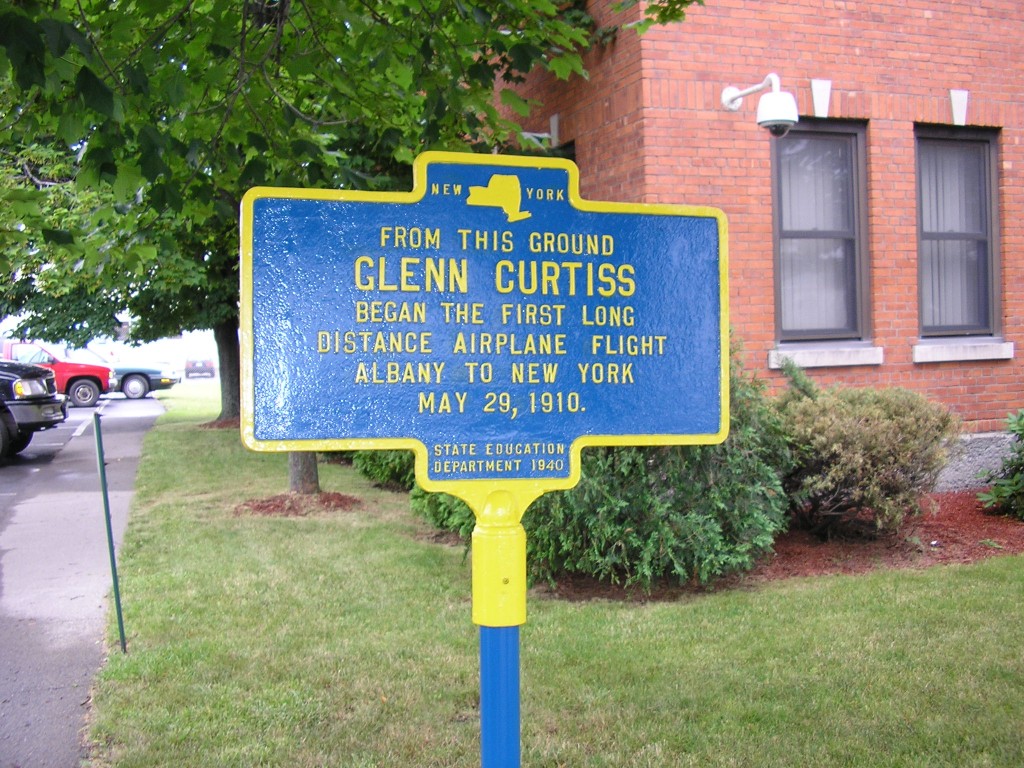
From this ground
Glenn Curtiss Began the First Long Distance Airplane Flight Albany to New York May 29, 1910 |
Glenn Curtiss flight marker, Albany, NY
|
|||

|
|||
|
The RNC is the official national campaign organization of the Republican Party.
|
|